

Charting fifty years of failure
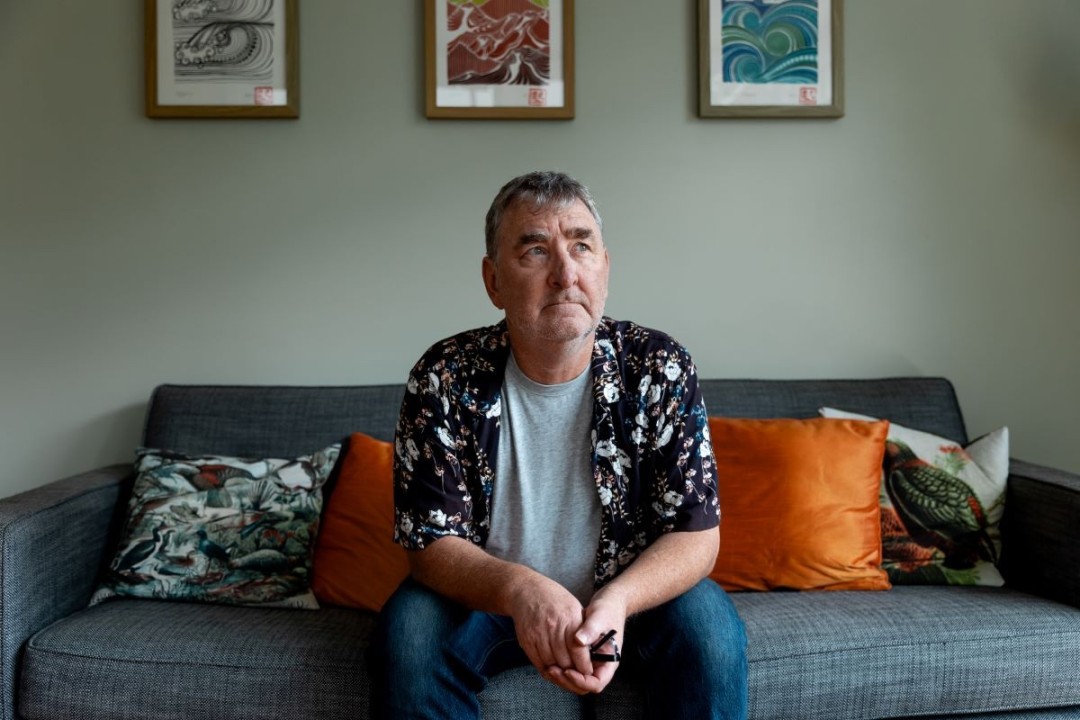
On the 50th anniversary of the Misuse of Drugs Act 1975, journalist Russell Brown charts a potted history of New Zealand's outdated drug law.
It wasn't meant to be this way.
By the late 1960s, concern about drug use was growing in New Zealand - and not without reason. In the five years after the passage of the country's first modern drug law, the Narcotics Act 1965, the number of reported annual drug offences had trebled, and the trend was accelerating (ultimately rising from 135 in 1965 to nearly 5000 in 1975).
Additionally, more young people were using drugs. In 1968, 40% of those charged with drug offences were under 20, and a further 39% were between 20 and 25. At the same time, hospital admissions with a diagnosis of drug dependency had increased sharply, and most of the increase was in people under 25. The Narcotics Act was not only failing to curb harm, it might actually be causing harm itself. These were, after all, people's children.
In April 1968, Health Minister Don McKay wrote to the Board of Health requesting that it form a committee "to enquire into and report on drug dependency and drug abuse in New Zealand and matters relating thereto and make recommendations to the Board."
We weren't alone in trying to work out what was going on. Other countries had their inquiries too – although few, if any, lasted as long as ours. The Board of Health Committee worked for five years, guided throughout by then-Deputy Director-General of Health Geoffrey Blake-Palmer, and produced two reports that ultimately – and imperfectly – shaped the Misuse of Drugs Act 1975.
In many ways, it was an admirable exercise. The Committee invited testimony from people who used drugs and drew up a questionnaire to be distributed via courts and hospitals. Its first report, in 1970, emphasised the social factors in drug use, made a point of characterising alcohol and tobacco as drugs too, and recommended that for "minor offenders" the "needs for effective rehabilitation should have precedence over those of punishment". It also suggested that anyone charged with a drug offence should have a psychiatric assessment before going to court.
Nonetheless, it was a product of its time. It cited a now debunked claim that LSD could cause chromosomal damage and birth defects. It also repeatedly fretted about the greater harm caused by cannabis resin over cannabis flower, even though at the time the most obvious harms were caused by diverted pharmaceuticals: opioids and barbiturates
Its appendix included a statement from John Gillies – convicted in the 1963 Bassett Road machine gun murders, a shocking event which ultimately led to the passage of the Narcotics Act – who claimed that "the smoking of marijuana and the consumption of drugs ... was the sole cause of my taking the lives of the two people."
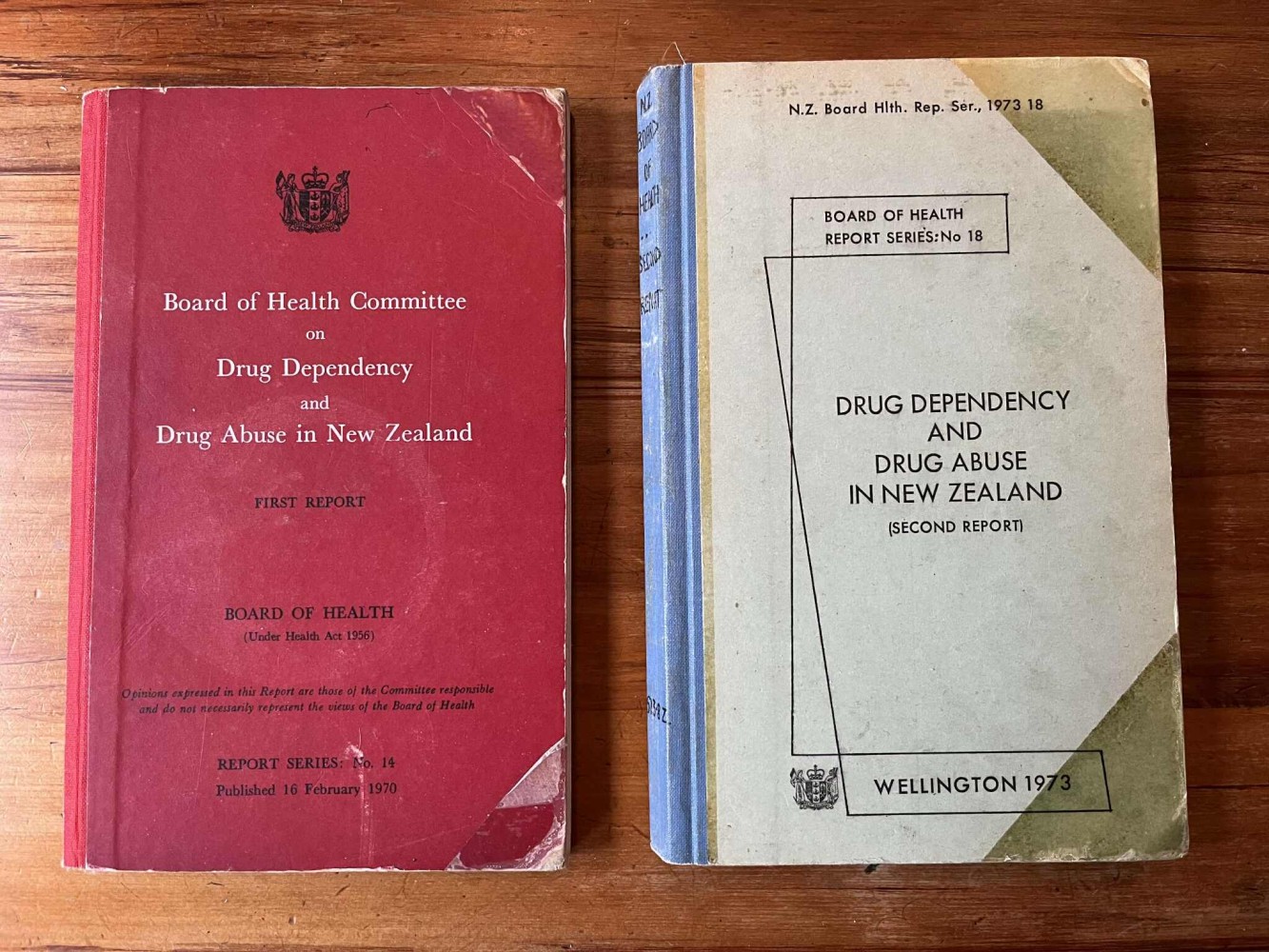
The Board of Heath Committee's first and second reports into 'drug dependency and drug abuse in New Zealand'. Photo: Russell Brown
The Committee’s second report, in 1973 – known since as the Blake-Palmer Report – was more substantial and took note of the ongoing work of inquiries in other countries (whose publications were couriered in by New Zealand diplomatic staff).
The report acknowledged the idea that drug laws could cause as much harm as the drugs themselves. While it argued that criminal sanctions on the use and possession of drugs should remain, it did acknowledge that some drugs posed more harm than others, and recommended a schedule of penalties reflecting that differential. This was to be the basis of the classifications in the Misuse of Drugs Act, a striking departure from the way drugs were seen in the Narcotics Act.
The Committee's emphasis on therapeutic rather than punitive solutions to the drug problem was stronger than ever:
Although we have recommended the retention of the legal sanctions for the misuse of drugs, we would also like to press for the development of alternatives to legal sanctions which would hopefully reduce the number of offenders reaching the courts. We cannot stress too strongly our belief that legal sanctions should be used as sparingly as possible, when other measures have been tried and failed."
Notably, where the first report had included John Gillies' letter, the second featured one from toxicologist Ray Henwood (Dai Henwood's father), who argued that the real question was not “why do people take drugs?” but "why do some people become addicted – or mastered by drugs – and a majority escape such servitude?"
A note under Henwood’s letter read, "The views expressed in this appendix are not necessarily those of the Committee.”
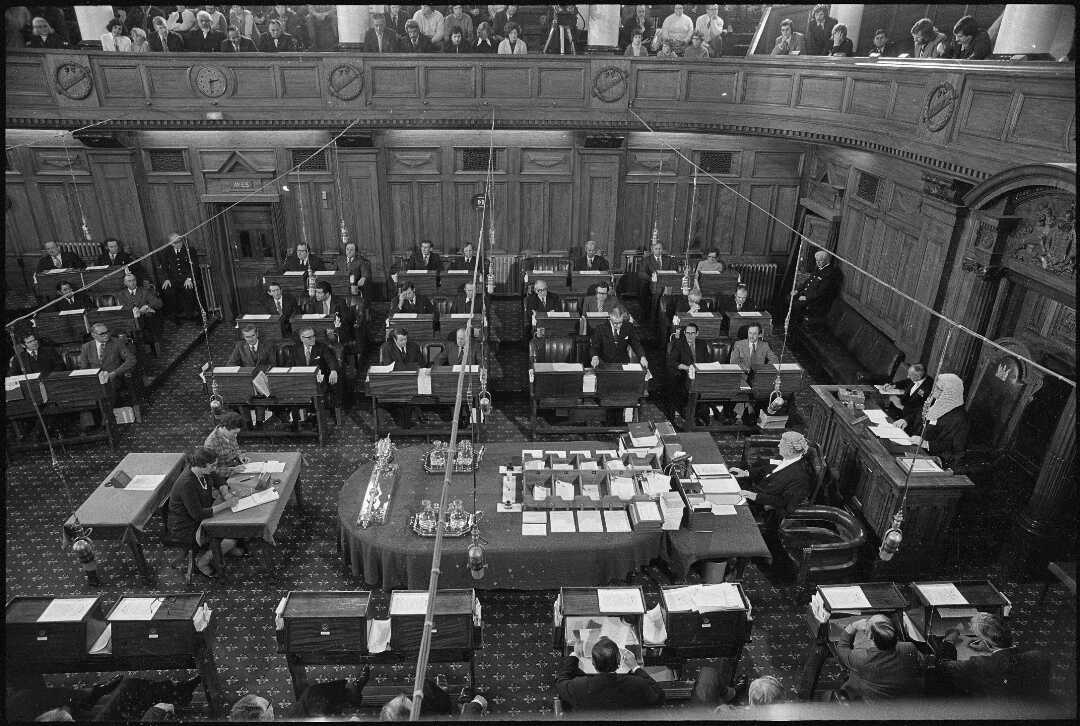
Inside the House of Representatives (debating chamber), Parliament Buildings, Wellington, 1974. Evening post (Newspaper. 1865-2002) :Photographic negatives and prints of the Evening Post newspaper. Ref: 1/4-021786-F. Alexander Turnbull Library, Wellington, New Zealand. /records/22752958
MODA is born
On March 28, 1974, the first reading of what was then called the Drugs (Prevention of Misuse) Bill began. Health Minister Bob Tizard introduced the bill and confirmed the Committee's recommendation of a tiered classification system. The Narcotics Act's sweeping powers of warrantless search would be rolled back to only apply to "potent drugs such as heroin, LSD and several other hallucinogens". (While LSD and mescaline had been scheduled in 1967, psilocybin and the mushrooms containing it would be controlled drugs for the first time.)
Amphetamines were also scheduled, in keeping with growing international concern about non-medical use. A key purpose of the bill was to give substance to New Zealand's obligations under the United Nations Single Convention on Narcotic Drugs and Convention on Psychotropic Substances. A new system of associated regulations relating to medical use of controlled drugs was introduced. Opposition National Party MPs expressed approval with a few qualms.
The Board of Health Committee's repeated and emphatic plea for punitive measures to be employed only as a last resort had gone missing. The subsequent Select Committee report on the Bill made an effort to restore the idea and, in a strong speech, Labour's Invercargill MP (and pioneering disability advocate) J. B. Munro argued passionately for resources to be put into treatment, and for alcohol and tobacco to be regarded as harmful drugs alongside those controlled in the new bill, with its emphasis on harsher penalties for "pushers".
In past years, we have tended to deal with some of the pushers of alcohol by giving them knighthoods. Now we seem to think we have to put drug pushers in jail."
Munro's colleague, Police Minister Michael Connelly, followed with an unabashedly prohibitionist speech in which he quoted since-debunked claims about cannabis and concluded by emphasising:
I cannot emphasise too strongly the grave effect that drugs today pose to health, to attitudes to work, and to attitudes towards crime, and the threat they pose to family life and, if not curbed, to the very life of our society. I personally consider that it is essential that a firm line be taken on drug trafficking and addiction at this time, and I am pleased that in the main this Bill takes such a line."
Connelly got his "firm line". On the 9th of October 1975, the Misuse of Drugs Bill was passed unanimously into law, coming into effect two years later. Half a century later, the principle of support before punishment remains missing from our drug law.
Donate to support safer drug laws
Support the Drug Foundation's efforts to advocate for evidence-based law reform.
Donate nowGlimpses of harm reduction
However sincere the desire of Parliament to prevent harm from drugs, one element of the Misuse of Drugs Act can be directly connected to the death and disability of tens of thousands of New Zealanders. Section 13 made it an offence to possess needles and syringes for the purpose of an offence under any other section of the Act.
The harm came in a form neither the committee or MPs saw coming: blood-borne viruses. In 1988, Parliament amended the Health Regulations to provide a defence for possession of needles if they had been obtained from a doctor, pharmacist or "authorised representative" (but only after a few brave pharmacists had risked their businesses to quietly supply clean needles to people who injected drugs). It was the first turn away from the tough-on-drugs mantra, but the measure passed unanimously – the fear of AIDS trumped the fear of drugs in MPs' minds.
In 2004 Associate Health Minister Jim Anderton introduced an amendment to the Misuse of Drugs Act that removed the conflict between the Act and the Health Regulations, reversed the onus of proof for possession of needles – and, crucially, made it easier for the national network of needle exchanges to operate.
Anderton, a former hardliner, had been persuaded by an independent review that found the 1988 amendment had prevented more than 2000 cases of HIV/AIDS and Hepatitis C, saved $35 million in treatment costs, and that every dollar spent on needle exchanges saved $20 in lifetime treatment costs. New Zealand stood out among developed nations for its very low prevalence of HIV among people who injected drugs. Where half of the people who injected drugs shared needles in the 1980s, only 6% did so now. Who wouldn't want more of that?
Not everyone agreed. National MP Tony Ryall told the House the amendment was "all part of a politically correct, liberal agenda being pushed by this Government and the health authorities under the name of harm minimisation, when what is required is leadership that says this stuff is wrong and should be stopped."
Ryall never attempted to reverse the change when he subsequently became Minister of Health. But for a long time, allowing the supply of needles stood as our only legislative support for harm reduction – even as New Zealand was part of a group of countries battling to get the phrase "harm reduction" accepted at United Nations level.
That changed in 2020, when a temporary law change made a slew of amendments to the Misuse of Drugs Act to allow drug checking to proceed during the coming summer festival season. The following year, the Drug and Substance Checking Legislation Act 2021 made it permanent. Drug checking services had been quietly operating at events for several years, with the increasingly active cooperation of police, but the law change meant event promoters were no longer risking their livelihoods by allowing it.
The changes were timely: as the Covid pandemic disrupted global drug supply in late 2020, New Zealand was flooded with potentially dangerous cathinones sold as MDMA. The service likely saved numerous lives.
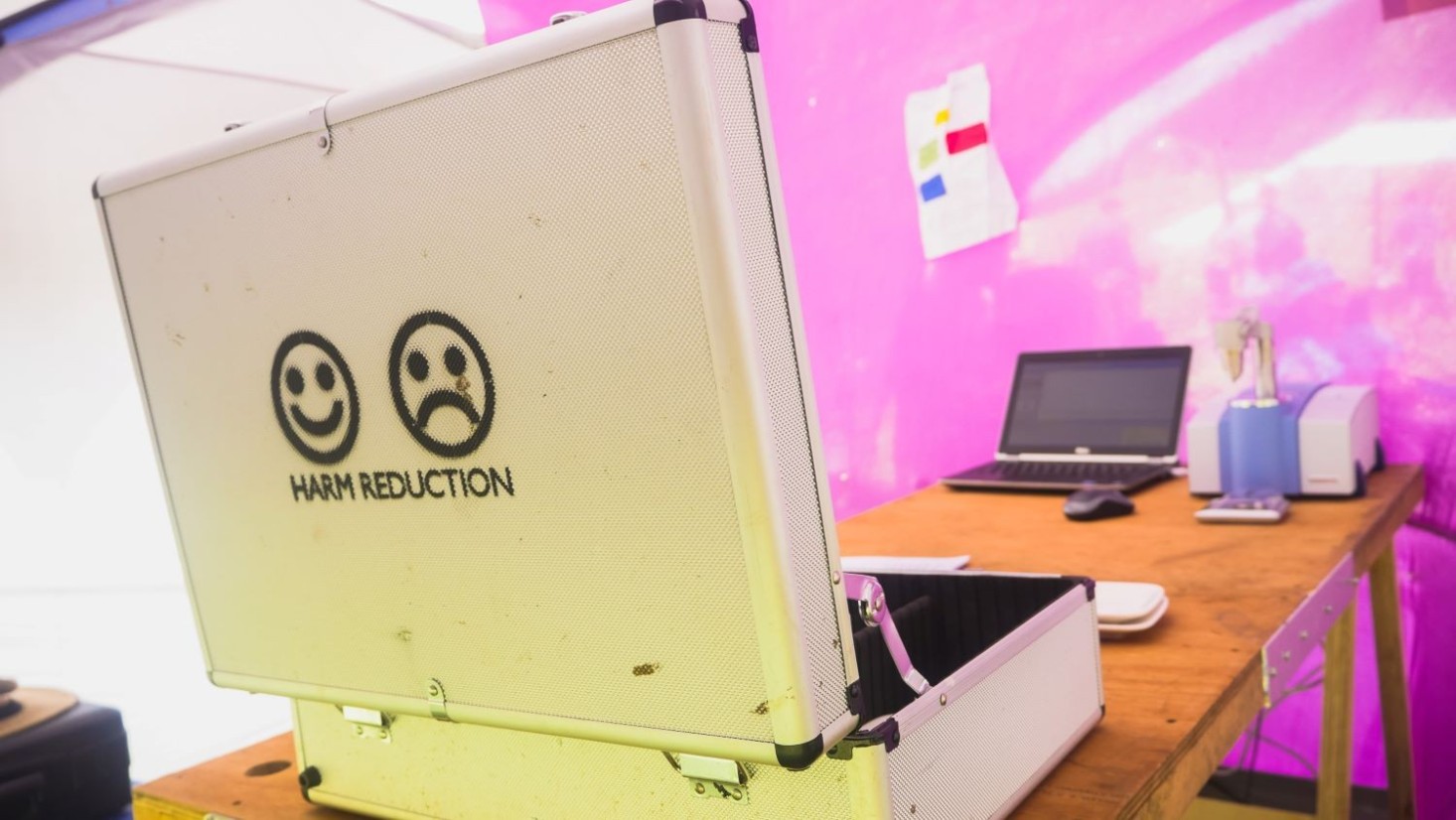
Inside an early KnowYourStuffNZ drug checking clinic
As with the 2004 amendments, there was strident political opposition and predictions of doom, but no attempt to reverse the change when opposition parties entered government. Police, health agencies, and non-government organisations now routinely work together to share information collected through drug checking.
Dealing with cannabis
In the years before the Misuse of Drugs Act, the legal status of cannabis was far more of a live issue than we might assume today. The Board of Health Committee considered the issue in response to submissions it received and to the findings of inquiries in other countries (notably, Britain's Wootton Report and Canada's Le Dain Commission, which both recommended legalisation of personal use and possession). The understanding that cannabis was apparently less harmful than other drugs underpinned the "ABC" classification system adopted in 1975.
Yet at the first reading of the Misuse of Drugs Act, Health Minister Bob Tizard explained that a clause providing for lower penalties for cannabis had been withheld pending study of a "recent report" claiming that cannabis was more harmful than supposed.
The "recent report" was the work of the American anti-cannabis campaigner Dr Gabriel Nahas, who often weighed in on the drug law deliberations of other countries. His claim to have shown that THC could impair DNA synthesis was soon debunked by other researchers, but not before influencing the debate abroad. As late as 1992, the Medical Journal of Australia published his review claiming "new evidence" that cannabis was far more harmful than supposed. Later, nearly all of Nahas's citations were exposed by two Australian pharmacologists as misleading. Too late, however, for the Misuse of Drugs Act.
In the end, penalties for cannabis offences were set lower than those for heroin, warrantless searches could not be used for cannabis offences, and it was no longer a supply offence to pass a joint to someone at a party. But it seems likely that the scaremongering had a bearing on the final settings.
While the debate over reform continued and intensified in the following decades, nothing really happened to cannabis in the law until 2018, when the Misuse of Drugs (Medicinal Cannabis) Amendment Act paved the way for a medicinal cannabis scheme. Strict product regulation made local cannabis production difficult, but people with the means can now legally buy cannabis flower from a clinic – while others, often younger, poorer, and Māori, remain criminalised. A temporary exemption for palliative care patients also endures, with calls for its expansion.
A far more consequential change – the legalisation and regulation of cannabis for adult use – narrowly failed to win approval in a 2020 referendum. Although a majority of the public (and even some "no" campaigners in the referendum) favours some form of cannabis reform, the idea of legal weed stores was a step too far for some New Zealanders, especially in South Auckland, which had enough trouble with liquor stores.
One other anomaly persists from the earliest deliberations of the Board of Health committee to the present day: the Committee’s belief that cannabis resin was more harmful than flower. Consequently, the special muffins your auntie makes are, as a "cannabis preparation", a Class B drug alongside morphine in the law. The maximum penalty for baking those muffins? Ten years' imprisonment.
Reviews of the Misuse of Drugs Act
As early as 1989, the Drugs Advisory Committee observed that while the Blake-Palmer report had recommended the continuation of cannabis prohibition "so long as this [could] be shown to be largely effective", it had not been effective at all, and prohibition had some adverse effects. Its recommendation for the introduction of civil penalties went unanswered, as did those of two later Select Committee inquiries which found that cannabis law needed reform.
The Law Commission's 2011 review of the Misuse of Drugs Act offered a comprehensive critique. It set out the case for drug law reform in clear terms: the drug landscape had changed since 1975; the law was not consistent with New Zealand's official National Drug Policy and its principles of harm minimisation; resources were being disproportionately devoted to "detection, enforcement, justice and corrections" over other approaches; the status quo represented "a distinctly punitive approach to lower level offending" and "a disproportionate response to the harm those offences cause"; and, finally, controls for dealing with the wave of new psychoactive substances were absent. Only the last recommendation was acted on: the Psychoactive Substances Act embodied its proposal for a regulatory regime to deal with – and, where appropriate, regulate – new drugs.
In 2018, He Ara Oranga: Report of the Government Inquiry into Mental Health and Addiction – the biggest exercise of its kind in a generation – went considerably further. Its recommendations, developed in consultation with practitioners and researchers around the country, explicitly called for a move to decriminalisation, citing Portugal as a model:
Across the country there was a clear call to adopt an approach to drug use that minimised harm. Minimising harm from drug use requires viewing use as a health and social issue that can be solved, or at least managed, by providing support, compassion, and access to treatment for users. It also requires us all to counter prejudices about people who use drugs."
Criminal sanctions for the use and possession of drugs should be replaced with civil responses, including fines and referrals to drug awareness and treatment programmes, the report said.
"The criminalisation of drugs is widespread around the world, yet it has failed to decrease drug use or the harmful effects of drug use", and was itself a barrier to seeking help; while "a criminal conviction for drug use has far-reaching impacts across a person’s life.”
The report could hardly have been clearer, and it seemed to offer significant political cover for meaningful law reform. The following year, there was a response – and it took a familiar form…
Leaning on discretion
The idea that any excesses in drug law could be remedied not by better writing of the law itself, but through the discretion of the courts and police, was very attractive to the Board of Health Committee. It has remained attractive to opponents of drug law reform ever since.
Sentencing decisions have evolved alongside community attitudes. Since the early 90s, the number of cannabis apprehensions and the rate of prosecutions have both fallen steadily and the use of "alternative actions" has risen. More than one commentator observed that the use of police discretion was heading towards de facto decriminalisation.
In 2019, the Government moved to formalise and put some guidance around the use of police discretion with the Misuse of Drugs Amendment Act 2019. Along with several measures addressing the synthetic cannabinoid problem (six years after the drugs had been banned), it added new wording to Section 7 of the Act which covers the use and possession of controlled drugs, stating that prosecution should not be brought unless it is required “in the public interest”, and that therapeutic or health-centred approaches should be considered.
To some, it seemed like a back-door step towards Portugal-style decriminalisation – and fulfilment of the Blake-Palmer report’s call for punishment as a last resort.
It didn't work out that way. Four years later, the rate of prosecution for first-time drug offenders had fallen from 35% to 17%. But for repeat offenders – who it could be argued are most in need of a therapeutic intervention – the rate was still well over 50%. Critically, although the overall rate of criminal prosecution had dropped significantly, the disparity in prosecution rates for Māori – an issue the amendment was supposed to fix – was quite intact.
In part, that was down to wording changes secured by New Zealand First, which effectively placed the perceived public interest over the personal welfare of the offender, and essentially obscured the guidance. In part it related to the most difficult questions for any decriminalisation regime: what should a "therapeutic response" look like, who should it apply to, and how could it be resourced?
But it also signalled the limits of letting individual police officers decide whether or not to enforce the law. While police officers do often act as social workers and work with agencies that support vulnerable people with substance use problems rather than punishing them, it is not a universal practice. Police in some districts are far more likely to prosecute than in others.
Whatever our drug law is supposed to be, it should not be a postcode lottery.
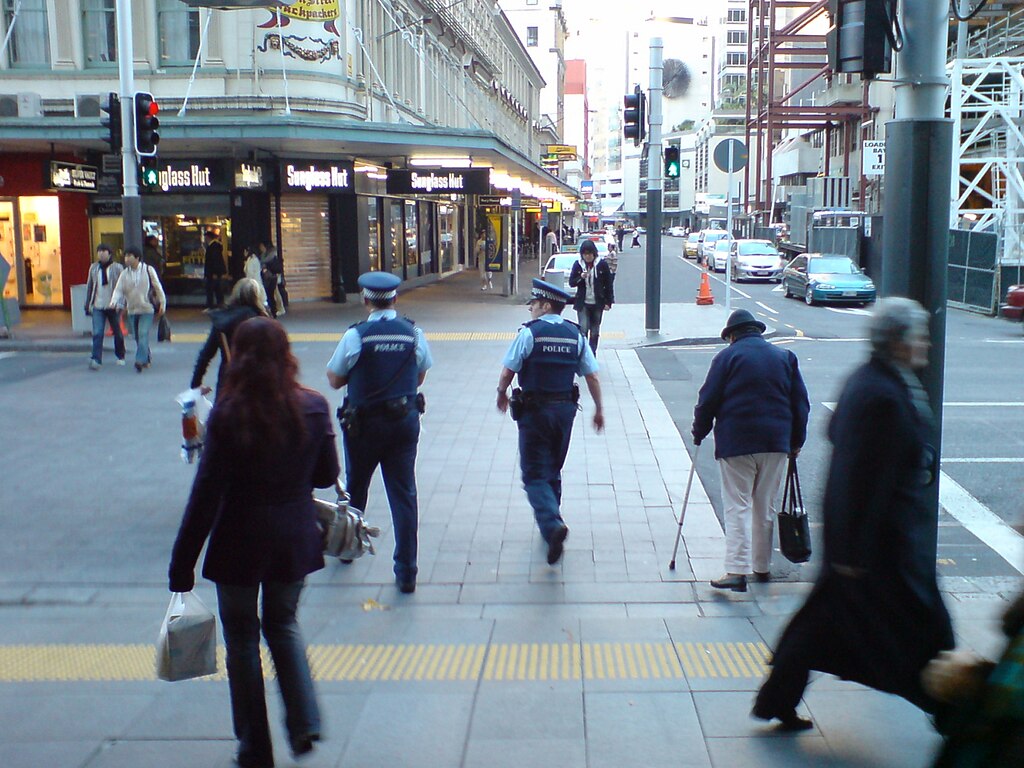
Police officers in downtown Auckland, 2008
The Psychoactive Substances Act
The great irony of attempts to suppress the supply of known illicit drugs is that success in doing so has had the effect not of a reduction in drug-taking, but the advent of new, more dangerous drugs.
The rise of synthetic cannabinoid products in New Zealand was at least partly a consequence of the continuing illegal status of natural cannabis. While the first products were chemically close enough to fall foul of the analogue provisions added to the Misuse of Drugs Act in 1996 (which automatically banned drugs substantially similar to existing controlled drugs), they were supplanted in the market by new substances that didn't – and had to be banned one-by-one.
This approach had worked to end the era of BZP-based "party pills", which had flourished as a legal alternative to conventional party drugs (although banning BZP may have turned the stimulant market back towards methamphetamine), but the supply of new, poorly-understood synthetic cannabinoids was effectively endless. It was a game of whack-a-mole the government couldn't win. By 2013, new and increasingly dangerous synthetic cannabinoids were being sold to the public at around 4000 retail outlets, including corner dairies.
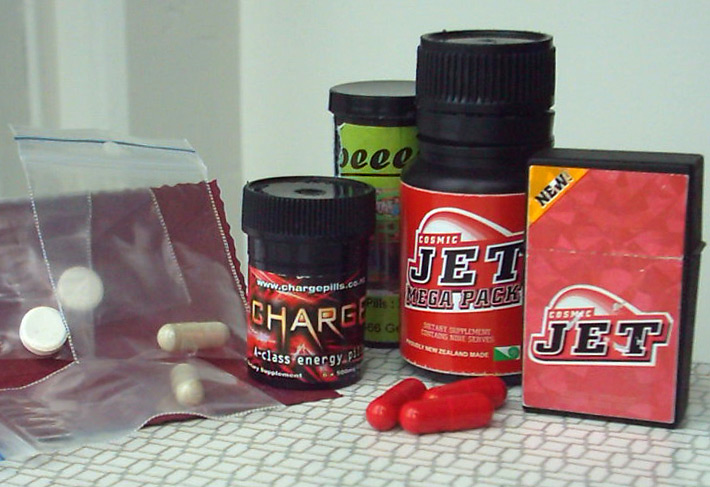
Some brands of BZP available in New Zealand in 2004. Photo licensed under CC BY-SA 3.0 by TristanB.
Enter the Psychoactive Substances Act 2013 (PSA), at the hands of Associate Health Minister Peter Dunne. Remarkably, it was based on ideas proposed in the Law Commission’s review of the Misuse of Drugs Act, which had been effectively dismissed by the Government only two years earlier. The Act presumptively banned all psychoactive substances from sale, but created a regulatory pathway to approval for those that demonstrated only a low risk of harm. It passed with just one dissenting vote, that of John Banks.
The problem for the PSA was that it arrived into the middle of a raging market of new drugs that no one really understood. On the logic that it needed an industry to regulate, the government, via the Ministry of Health, introduced a system of interim product licences. But the approvals were essentially guesswork.
The new Psychoactive Substances Regulatory Authority lacked the resources to carry out its duties under the law and the interim period dragged on. Although regulatory powers under the Act had slashed the number of retail outlets from 4000 to fewer than 170, and there was evidence that ED presentations and reports to the National Poisons Centre were falling, the public (and the news media) became restive.
As the end of the year drew near, the Government raced to beat the Opposition to pass an amendment that effectively disabled the law. The parts of the Act enabling the interim licensing regime were repealed. Animal testing, essential to any sensible approval process, was prohibited ("the advisory committee must not have regard to the results of a trial that involves the use of an animal"), although animal test data from elsewhere could still be cited to deny approval of a product, just not to approve it.
The Psychoactive Substances Act, briefly seen as a world-leading law, became basically a shell – a law with nothing to do. But its shutdown would have a grim coda.
While visible sales and use of synthetics disappeared, it carried on out of sight and beyond the reach of regulation, in the most marginalised communities. For the first time, people who used synthetics started dying. In 2017, Police revealed that 20 recent deaths appeared to be associated with the use of illicit synthetic cannabinoids. In almost all cases, the deaths were overdoses – the result of sloppy backyard spraying and loose dosing of leaf matter sold as "synthetics". The very problem, in other words, that the Psychoactive Substances regulations had aimed to prevent.

Hon Peter Dunne at the United Nations Commission on Narcotic Drugs in 2013
So where are we now?
The past 50 years have in many ways been a repeating story, one in which almost everything has changed but the law itself.
The classification system in the 1975 law was a significant improvement on the Narcotics Act in its recognition that the force of the law should reflect the actual harms posed by different drugs. But that system has become an anachronism. Psychedelic drugs, which a major University of Otago study in 2023 found pose a relatively low risk of personal and social harm, remain where they were placed 50 years ago, in Class A. The same study found the substance that causes the greatest widespread harm to New Zealand society is alcohol.
The law's provisions around medical and research use of controlled drugs have hampered both doctors and researchers. Paradoxically, they have also meant a mere ministerial direction, rather than a law change, was required recently to permit the prescription of psilocybin on a case-by-case basis.
Our understanding of the most effective ways to prevent drug harm has changed in the past half century. The approach of both the courts and the police have changed. The international environment has changed, most notably around cannabis. And society has changed. More than 200,000 New Zealanders now use MDMA every year. In the wake of the cannabis referendum and the introduction of the Medicinal Cannabis Scheme, the broad social sanction around cannabis has all but evaporated.
And yet, successive Parliaments have shied away from reworking the law itself, aside from loading it up with amendments, only a handful of which have reflected new understandings and approaches. The idea that the discretion of the courts and the police can curb the law's adverse effects has been stretched as far as it can go.
It is time for the law to change. It is time for some courage on the part of those who make law.
Safer drug laws for Aotearoa New Zealand
Find out more about our pragmatic, evidence-based recommendations for safer drug laws.
Read the reportShare:
Topics
Drugs
Recent news

Overdose deaths remain unacceptably high as stimulant harms increase
New Zealand is losing three people a week to preventable overdose, while hospitalisations from stimulants like methamphetamine and cocaine are increasing alongside a recent surge in consumption.
Report: Drug overdoses in Aotearoa 2026
Our annual report compiling coronial and hospitalisation data.

Election 2026: Where the parties stand on reducing drug harm
There is common ground among parties on reducing drug harms and supporting addiction treatment, suggesting progress can be made in the next term.