

A peer-led model is the key to ReWired’s success
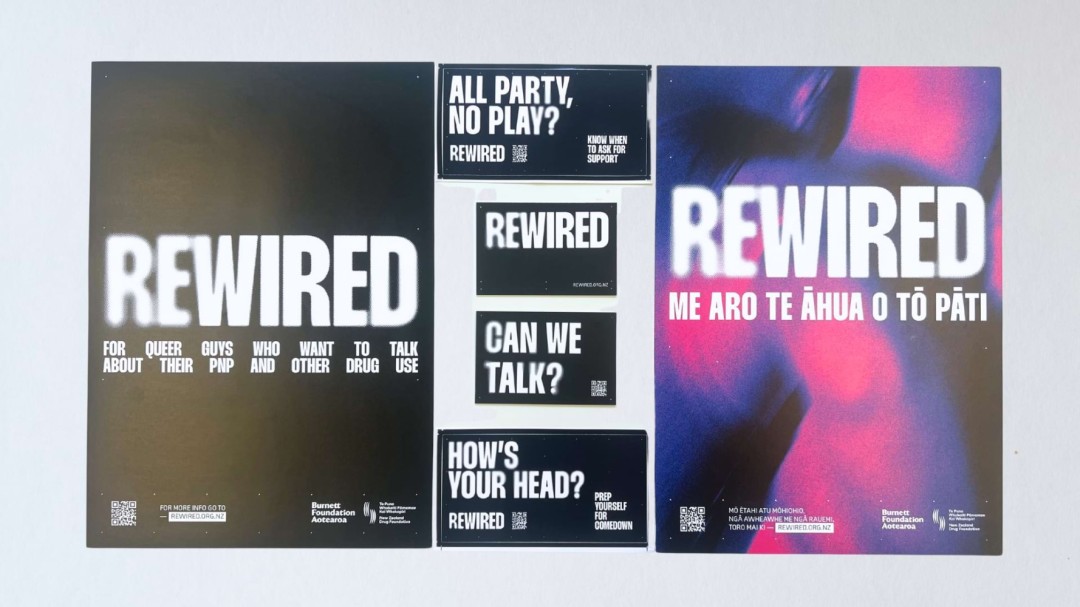
A recent evaluation of ReWired found the mutual-aid programme is outperforming international benchmarks and making a real difference to those who take part.
Participants reported an average 57% reduction in methamphetamine use – well above the 30–40% typical of alcohol and other drug (AOD) services – and an 86% reduction in needle sharing, a huge win for prevention of HIV and Hep C.
“From a public health perspective, the almost complete elimination of equipment sharing is huge. We know that’s a major HIV and Hep C transmission route. Even if that was the only outcome, it would be worth the investment.”
Community stakeholder
But how is the programme delivering such positive outcomes? There is much more to the story than just the headline numbers: what is it about ReWired that's working, and what can other peer-led programmes learn from it?
What is ReWired?
‘Mutual aid’ refers to an approach where a group of people with shared experiences support each other as equals. Everyone in the room both gives and receives support, and the knowledge that counts is lived experience. This is the ethos that ReWired is built on.
ReWired is a peer support programme for guys who have sex with other guys and who want to make changes to their methamphetamine use, focussing on the Party ‘n’ Play (PnP) and chemsex scene.
The programme is delivered through a partnership between NZ Drug Foundation, Burnett Foundation and BodyPositive. Importantly, it was designed and built by, for, and with its community. The mutual-aid group sessions are led by trained peer facilitators and run for eight weeks, several times a year both virtually and in person across Aotearoa.
A mutual aid programme getting clinical-level results
For Anne Bateman, Director of Bateman Consulting and the programme's external evaluator, the headline finding was that a non-clinical model is producing clinical-level outcomes.
"This is a mutual-aid programme, so you don't necessarily expect to find the strong clinical outcomes we saw," Bateman says.
That sentiment is shared by those working in the sector. One person interviewed for the evaluation has worked in the AOD sector for 20 years and says that peer-led models, when done well, are incredibly powerful.
“People open up to peers in ways they never would with clinicians. There’s an authenticity and trust that you just can’t replicate with professional staff."
- Interviewee
Programme Lead Shaun Hill agrees that the scale of change took him by surprise.
"The average reduction in meth use being so high was genuinely surprising. While I was aware that there was significant change happening for many folks coming through our doors, the group isn't as intensive as things like residential treatment or ongoing one-to-one therapeutic work; to see rates above that is a pleasant shock."
On average, participants rated their satisfaction with their own progress as 7.8 out of 10. They also reported improvements in other areas of their life including an 89% reduction in housing difficulties and a 67% improvement in psychological distress scores.
With results like this across several areas, the value of the programme is hard to ignore, as expressed by one participant: “It's hard to fault a loving programme that's out there to help people.”
Lived experience is a key part of design and delivery
Both Bateman and Hill point to the same thing when asked what makes the model work: lived experience isn't an add-on, it's the foundation of the programme.
"The fact that ReWired is really for peers by peers is a very meaningful statement," Bateman says. "We're seeing more and more of the lived experience voice, not just in delivery, but in design. I think that was a really strong component that led to such positive outcomes."
The evaluation itself was designed the same way. Peers from that community were trained as interviewers and became part of the evaluation team — a deliberate choice to keep the methodology consistent with the programme's values.
"It becomes much more of a lived experience grounding for the evaluation itself," Bateman says. "A true and authentic way to evaluate a peer-led programme."
Hill says facilitators with lived experience truly understand what people are going through and are crucial to the success of the model.
"We've gathered a team of folks with lived experience that have so much heart, wisdom, and willingness to go above and beyond... Being able to create a safe space to explore topics that are so stigmatised and heavy, while bringing a lightness to it all, makes people feel change is possible – it’s a real gift."
Meeting people where they are
ReWired is a harm reduction programme where participants set their own goals, and the model is deliberately non-judgmental.
Hill recalls how there was a real gap in services for guys who PnP. "They’re so often cast out and stigmatised both in and out of their community,” he says. “Creating an environment for them to feel held, respected, and have their agency reinforced can do a lot for lasting change."
One participant described how they felt when they came across an ad for ReWired and decided to take action.
“I was experiencing the downside of meth … and I didn’t feel like I had a forum for addressing it seriously, and I didn’t think I could tackle it on my own so when I saw an ad on a dating app, I thought, ‘oh that sounds like me’.”
- Participant
And Hill seems to be right – the approach appears to have lasting effects. Some participants describe their lives in terms of "before ReWired and after ReWired" many months after completing the eight-week programme.
"This is often the first time many of the people in our groups are able to talk about their concerns or challenges in an integrated way," Hill says. "The sex and drugs aspects are both given equal weight, and they can share with people who understand the language of the scene and community."
Bateman put it simply: "The underlying principle of ReWired is about making those healthy connections where you build a network of support with people who understand you."
Lessons for other peer-led programmes
Asked what other community programmes could take from ReWired, Hill keeps coming back to one idea: the people you're trying to support already have most of the answers.
"The communities we're supporting have so many solutions, innovations, and insights they've developed over time, as well as a shared language and understanding of what care and camaraderie look like. Treating all of that with full respect is crucial to be able to make things work effectively. People respond so much better when it feels like you're moving in-step with them rather than leading, and the outcomes reflect that."
He's also blunt about the practicalities. "Co-design wherever possible and properly compensate people for their lived experience. That goes a long way to ensure they feel genuinely valued."
Bateman highlights two other ingredients that don't always get attention: organisational willingness to adapt, and the unglamorous work of having the right people at the table and keeping those cross-agency partners engaged. "It's a programme that continues to grow and develop and learn from its lessons. It has and continues to evolve as it's getting feedback."
ReWired's cross-agency steering group spans the Drug Foundation, Burnett Foundation Aotearoa, Body Positive, Odyssey, Health NZ, NZ Police and the Department of Corrections and received excellent marks in the evaluation. But it’s no easy feat keeping all those organisations engaged for over three years and through periods of change.
"The group continued to come together, even as individuals came and went through different government changes," Bateman says. "What really mattered was that all the representatives are people with a passion for the programme goals.”
A member of the steering group agreed: “The steering group has been one of the most functional cross-agency groups I’ve been part of. We have AOD, sexual health, police, corrections, Māori health, NGOs - all at the same table, all genuinely engaged. It speaks to how much people value this programme.”
There’s always room for improvement – what’s next for ReWired?
Even with some fantastic results, the evaluation also offers areas for future improvements.
Talking about sex and drugs can be taboo topics for some communities, especially when exploring their use in a PnP context. While insights gained from the past four years of ReWired have helped to highlight why talking about sex and drugs is important, there is still more work to do to develop strong culturally appropriate pathways for Māori and Pacific people especially. And this is something the Drug Foundation team are already working towards.
Hill says the next phase is about depth, not just reach.
"We've got such a solid chassis to build on. This next phase should focus on honing and deepening that capacity for support and co-design — working with community to empower them to create resources that speak directly to their experiences, or making active efforts to work with parts of community that have historically been left out of the conversation, such as our trans and non-binary whānau."
And the future looks bright. ReWired has recently secured funding to continue operating after the successful pilot phase. This is great news given that the programme has produced some of the strongest methamphetamine reduction outcomes of any comparable international programme reviewed.
Bateman's final reflection underlines the importance of this work continuing.
"It's a programme where you're keeping people well, but you're keeping people well in a lot of different domains — and keeping them connected, which is not only positive for them but we know has social value."
Recent news

Overdose deaths remain unacceptably high as stimulant harms increase
New Zealand is losing three people a week to preventable overdose, while hospitalisations from stimulants like methamphetamine and cocaine are increasing alongside a recent surge in consumption.
Report: Drug overdoses in Aotearoa 2026
Our annual report compiling coronial and hospitalisation data.

Election 2026: Where the parties stand on reducing drug harm
There is common ground among parties on reducing drug harms and supporting addiction treatment, suggesting progress can be made in the next term.